
Forging the Future in Technology
Powering through with Grit, Precision, and Purpose
STEM doesn’t just demand intelligence, it demands endurance. And for Deanna Hizon, Head of Executive Escalations for LinkedIn, and Karla Paula Muñoz, Semiconductor Engineering at Samsung, success in these spaces has never been about fitting in. It’s been about pushing forward anyway.
Hizon brings a battlefield-forged mindset into the fast-moving world of tech leadership, translating the discipline and adaptability she built in the U.S. Marines into high-impact problem-solving at LinkedIn. Muñoz, meanwhile, operates at the microscopic edge of innovation, engineering the semiconductor wafers that power modern life, where precision is measured in atoms, and every decision can ripple across entire systems. Their paths into STEM weren’t linear. They were tested by rejection, by doubt, by spaces where they were often the only woman, the only Latina, or both. But instead of stepping back, they leaned in building expertise, claiming their space, and redefining what leadership looks like in technical fields.
This is what STEM looks like now: resilient, diverse, and driven by those willing to take on the hardest problems. And as Hizon and Muñoz prove, the future of innovation belongs to those who don’t wait for a seat at the table, they engineer their own.
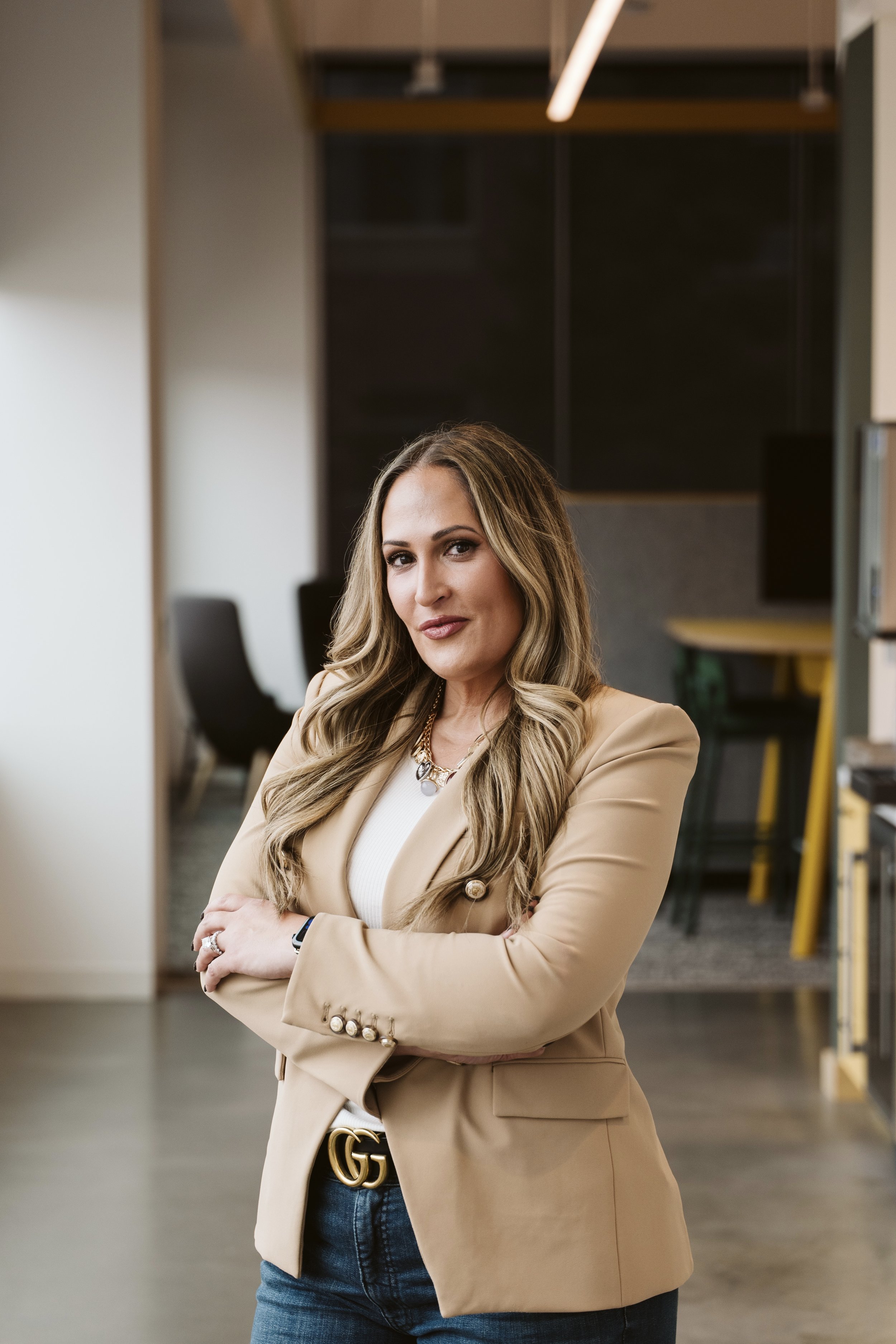
Deanna Hizon Head of Executive Escalations LinkedIn
When Deanna Hizon introduces herself, there’s an unmistakable clarity in her voice, a blend of confidence and humility honed over years “knocking down doors” in spaces where few expected her. As she puts it, “I haven’t met a door yet that I haven’t been willing to knock down or work around or traverse.”
Now the Head of Executive Escalations for LinkedIn, Hizon’s journey is one of remarkable turns: from a life-threatening illness as a college freshman, to a decorated career as a United States Marine, to leadership roles at some of America’s most recognized organizations. Each step, she says, was shaped by “a series of moments,” rather than a single defining event. “I don’t know that I envisioned myself necessarily in this particular role, but I did picture myself in a role where I could affect positive change and help develop leaders and lead teams to success.”
Her path to the Marines wasn’t straightforward. After narrowly surviving septic shock and overcoming an amputation, Hizon didn’t stop.
“I was twice denied because of my amputation,” she shares. “I wrote them an essay on why I wanted to be a Marine, submitted a video of me doing the physical fitness test, and they approved me.”
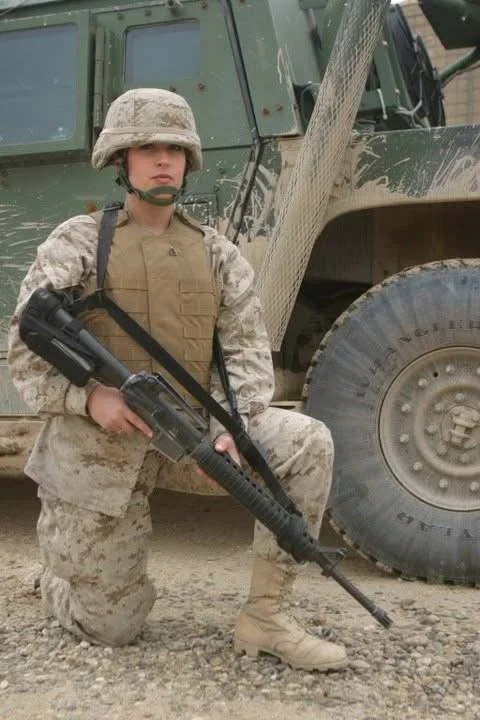
Deanna Hizon, while deployed in Iraq during Operation Iraqi Freedom, 2005.
She describes her time at boot camp as a rebirth. “That is where I found my confidence,” she shares. “That is where I realized how far I could absolutely push myself.”
From 2002 to 2006, Hizon served as MISCO Chief for the 2nd Marine Expeditionary Force, where boot camp and deployment to Iraq helped shape the foundation of her leadership and character, led teams, and embodied the Marine Corps’ core values of “honor, courage, and commitment.”
Those values, she says, shaped her approach as a civilian leader.
“The Marine Corps gave me a level of confidence that I did not possess before,” she shares. “Not an arrogant confidence, but a confidence of self-investment, of self-awareness.”
In the sometimes turbulent waters of customer support, she tells her team the most important lesson she took from the Marines, the ability to adapt and overcome.
“You are going to be faced with situations in life that you don’t anticipate,” she shares. “Typically, that is where the biggest challenges we face are, whether it’s a sick family member or losing a job, or financial instability as a result of losing a job, right? The ability to meet the moment with poise and grace, to assess the situation, and know that you have a pretty good track record of overcoming challenges, that is what keeps me going. I feel that the mantra of adapting and overcoming has gotten me through so many challenges in my life. It’s made me resilient. And I think that’s really the greatest byproduct of that mantra, resilience.”
Transitioning to civilian life wasn’t easy. “Being a Marine and then transitioning to civilian life was a challenge, because I think I felt lost for a while,” Hizon recalls.
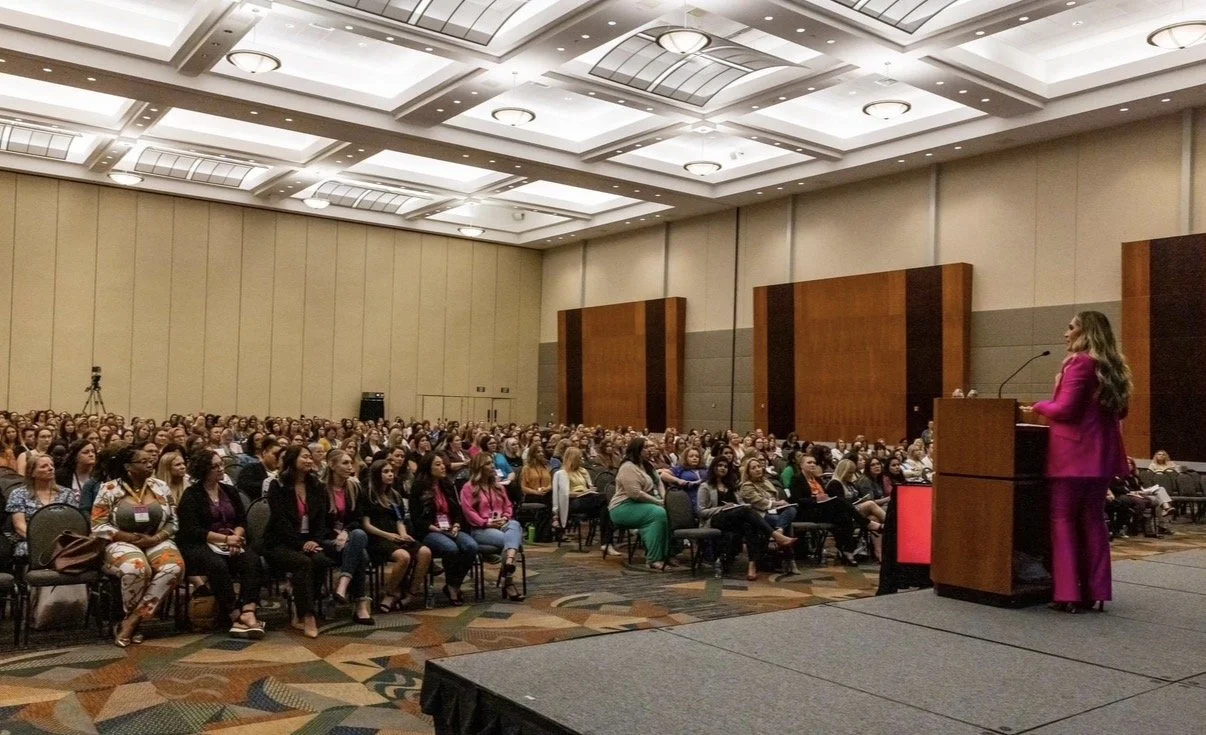
Deanna Hizon at the ICAN women’s conference, where she spoke about using Social Media for good.
She jumped at opportunities, no matter how unexpected, such as being a FedEx driver, radio host, Department of Defense analyst, before discovering her calling at LinkedIn, where she leads a global team supporting members and customers on behalf of executive leaders providing economic opportunity to every member of the global workforce.
Today, she returns to the importance of building others up. Hizon is committed to creating an environment where people can develop confidence in their own leadership and grow through meaningful work. She also mentors women in tech and transitioning veterans, helping amplify voices that often go unheard. Hizon’s greatest accomplishment has been watching her team evolve and grow into individual contributors.
“All it took was really holding a mirror to them and saying, You are capable. This is within the realm of possible,” she shares. “I’m going to be with you every step of the way.”
Proud of her Latina heritage, something she once felt the need to hide, Hizon wants others to see representation and possibility in her story. “Being Latina is actually a superpower. I can do things that some people can’t. I can speak two languages and come from this beautiful culture, which I credit for who I am today,” she shares. “It is my responsibility and my calling to make sure I open doors for other Latinas that maybe don’t feel like they have the opportunities.”
Born in Orlando, to a Puerto Rican father and a Spanish mother, her advice to Latinas or women trying to break into technology, or any field, is not to give up.
“Don’t let somebody who doesn’t necessarily recognize what you bring to the table dissuade you from pursuing what it is that you want to do,” she says. “Every no is one no closer to yes.”
She advises veterans to focus less on job-specific duties and more on the underlying skills required to perform them, and to write those skills down. Her key advice is to begin translating those abilities into terms that make sense in civilian life.
Asked how she finds the strength to keep going, she credits self-challenge and family.
“For me, my sense of purpose was driven by feeling like I had something to prove, and the person that I had to prove it to was myself,” she shares. “Now that I have a beautiful family, what keeps me going is my family, to be able to provide my kids the best version of any life that they could have.”
Hizon’s message is one of forging your own path, even when none exists. A speech by Kara Lawson on this very idea really stayed with Hizon. As she tells her team and hopes readers will remember, “If you wait for things to get easy, you’re going to essentially be passed up,” she shares. “You just have to become someone who handles hard things better. So in every challenge, I would say, look for the opportunity and if the opportunity doesn’t exist, create it.”

Karla Paula Muñoz Semiconductor Engineering Samsung
From the bustling streets of Mexico City to the high-tech halls of Samsung, Karla Paula Muñoz carries much more than a chemical engineering degree and nearly eight years of experience. She carries the stories of her parents in manufacturing, the quiet strength of her Mexican roots, and a determination to open doors wider for the next generation of Latinas in STEM.
Born in Mexico City, Muñoz and her parents moved to the United States when she was just nine months old. She grew up in Houston, where Texas became both home and launchpad. She joined Samsung right after graduating with a chemical engineering degree and, nearly eight years later, has carved out a dynamic career spanning multiple engineering roles. Today, she’s building a career in one of the most critical and complex industries of our time: semiconductors.
At Samsung, Muñoz has moved from a shift engineer in the CMP (chemical mechanical planarization) department to equipment engineering, then to a supervisory role managing eight engineers, and most recently into sustainability engineering, a role that stretches beyond a single department and aligns closely with her values.
I did not have a ton of background on that fabrication process before starting,” she shares. “I remember going to the facility; it was incredible for me because I saw so much automation moving all these wafers around. We don’t make phones or batteries or any of that. We make wafers, and these chips in the wafers are the ones that go into a lot of your logic technology, computers, phones, and everything.”
Muñoz shares that her job was precise and unforgiving, operating in an environment cleaner than a hospital room, at the angstrom and nanotechnology scale. There, she was responsible for ensuring wafer uniformity and troubleshooting any risks to production, reviewing and evaluating the risk of defects or yield issues, and making sure that she and her team were able to clear out any roadblocks. From there, she made a move many chemical engineers might shy away from. Equipment engineering, a space she once assumed belonged mostly to mechanical engineers. She learned the toolsets, tackled equipment downs, and dug into correlations between defects and tool parameters.
Her growth didn’t stop at the technical level. When Samsung opened a new site in Taylor, TX, an opportunity arose that would stretch her in a new direction. It was leadership.
“The role for supervisor opened up,” she shares. “I was put into the supervisor role for our front-end and middle of line teams… that was my first leadership role, and it was a lot of balancing… doing your individual contributions, and then also making sure to support the team and really scale everyone up.”
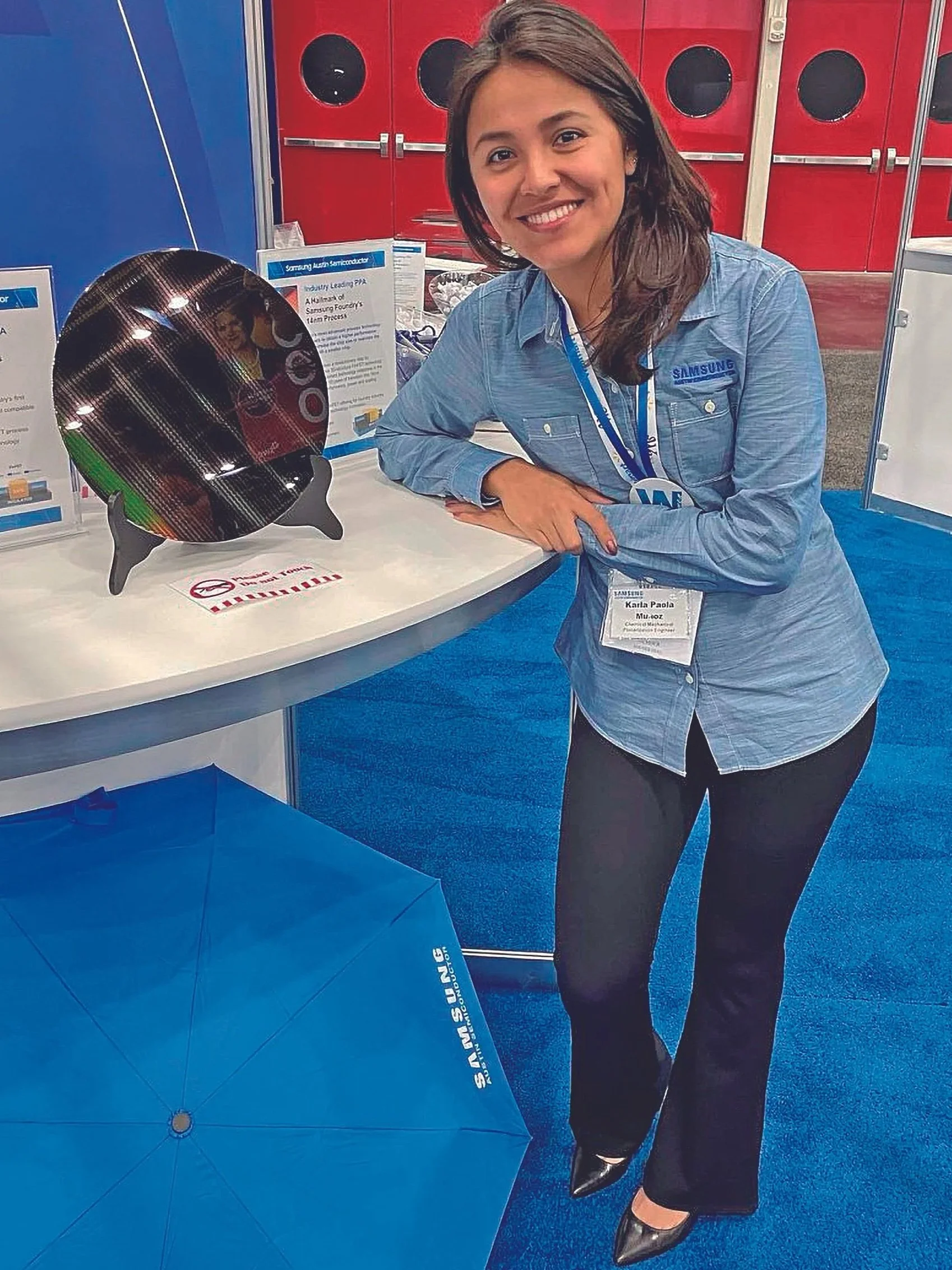
Karla Paula Muñoz representing Samsung at a recruiting conference.
Managing a team of eight engineers during a ramp-up, many of them new, pushed her to think beyond solving problems herself and toward building systems and people.
Recently, she took another leap, this time, back toward the core of why she fell in love with chemical engineering in the first place.
“Another opportunity opened up in sustainability engineering, and that role is something that I’m still transitioning to,” she shares. “I’ve been in the new role for about four months only… this is kind of taking my work scope outside of just the CMP department, and now looking at the entire site overall.”
In sustainability engineering, she’s part of Samsung’s long-range effort to meet 2030, 2040, and 2050 environmental goals, from water reduction and recycling to emissions and carbon neutrality.
Her work focuses on water reduction, emissions control, and recycling initiatives, contributing to the company’s aim to be carbon-free by 2050. For Muñoz, this isn’t just another role; it’s a direct alignment with her personal values.
“Given global warming effects and everything, seeing that there is a very active engagement to address some of those emission concerns and water quality and everything… that definitely makes me feel like we’re having a bigger impact,” she shares.