
Changing the Future, One Breakthrough at a Time
Latinas Redefining Science and Technology
By Gloria Romano-Barrera
Technology and science are transforming the way we live, work, and imagine the future. But behind every innovation are people whose stories remind us that progress is also about courage, curiosity, and the determination to create new possibilities.
For Vanessa Vazquez and Celia Ochoa Medina, that journey has taken different paths. One through technology and digital transformation, the other through biomedical science and drug discovery. Yet both are redefining what it means to be a Latina in fields where representation matters. Vazquez brings together technology, culture, and human connection at Johnson & Johnson, while Ochoa Medina is helping advance early drug discovery at Eli Lilly while pursuing her PhD.
Their stories are about more than professional achievement. They are about embracing identity, finding community, learning from those who opened doors before them, and becoming mentors for those coming next. In their own ways, both demonstrate that the most meaningful breakthroughs happen when knowledge is paired with purpose, and when one generation helps make the path wider for the next.
Vanessa Vazquez, Principal Software Engineer, Johnson & Johnson
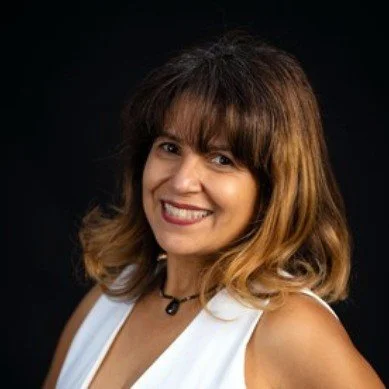
A principal engineer in the Johnson & Johnson Technology Group, Vanessa Vazquez has spent more than nine years translating complex systems into meaningful customer experiences. Today she works at the crossroads of technology, marketing, and human connection, serving as a connector between big ideas and real-world execution.
“They have the idea, and they come and say to technology, ‘Do we have this technology?’ And then they come to me and say, ‘Can we do this?’ And I say, ‘What time was the deadline?”
Her expertise spans global marketing automation, integrating websites, CRM, SMS, social media, and more to connect brands with people around the world. At Johnson & Johnson, she has contributed to MarTech architecture, data governance, integrations, automation, analytics, digital transformation, and emerging AI. Her work bridges technology, commercial, data, compliance, legal, and business teams, requiring technical expertise, collaboration, adaptability, and the ability to navigate complexity.
But behind the technology is someone deeply aware of ethics, privacy, and humanity. For Vazquez, technology is not simply about systems and platforms; it is about people and the responsibility that comes with access to their data.
“I understand the process of marketing. I understand the process of automation, but I also want you to be responsible with what you share online,” she says.
Vazquez did not begin her career in STEM. Her background was in newspaper communications, and she watched technology transform the industry around her. Her transition to Johnson & Johnson came through faith, timing, and an unexpected connection on LinkedIn.
“Do you believe the fact that they found me on LinkedIn?” she recalls.
She initially did not know the opportunity was with a Fortune 500 company. When her acceptance letter arrived, she remembers thinking, “Wait a minute, this is Johnson and Johnson.”
The achievement carried personal meaning. As a Latina daughter who wanted to help her mother, reaching that milestone was more than career advancement. It was a dream she hoped to share with her family. Although her mother passed away, Vazquez remembers that she knew how much the accomplishment meant to her daughter.
“I can’t believe you made it,” her mother told her. Vazquez remembers responding, “I can’t believe it either. This is a Fortune 500 company.”
That sense of gratitude continues to shape how she approaches her career. For Vazquez, culture is not something to set aside when entering a corporate environment. Her Puerto Rican and Latina identity informs how she connects with others, mentors younger professionals, and approaches leadership. She encourages women to embrace their culture rather than minimize it.
“Be authentically you,” she shares. “You don’t have to diminish yourself. If you’re a leader, people will understand who you are, and they will see your message clearly.”
One of Vazquez’s proudest accomplishments is not a particular project or title, but how much she has grown along the way. She began as a senior developer and evolved into management and leadership, gaining new perspectives as an engineer, developer, and leader. Working within a global company has also expanded her cultural intelligence, teaching her that leadership requires curiosity and adaptability.
“You cannot go with an attitude,” she shares. “You have to adapt.”
That openness is central to what she values most about Johnson & Johnson, its diversity of people, perspectives, work, and cultures, united by a common mission to help save lives.
“We are a global company, and we all have one mission,” she shares. “It is to help save lives.”
Her impact is felt in celebrating wins, big and small, and in the satisfaction of seeing projects go live. Inside Johnson & Johnson, Vazquez is active in Employee Resource Groups (ERGs) and leadership efforts that connect generations, cultures, and colleagues. But perhaps her most meaningful role is mentor.
Mentorship happened organically, she says, and became one of the most rewarding parts of her career. Her approach begins with listening and recognizing that every person’s journey is different.
“I think mentorship is necessary,” she shares. “I realized the importance of listening because your experience is not their experience.”
She recalls mentoring a young woman during an internship who was eager to learn but uncertain about her future. Vazquez recognized her curiosity and helped her explore where her strengths and interests could lead. The young woman eventually returned to Johnson & Johnson and discovered a passion for technology. For Vazquez, that is the essence of mentorship: helping someone recognize the intersection of their skills, passions, and purpose.
For Vazquez, success is not measured by titles or possessions. It is waking up fulfilled by what you do and knowing that your work has made a difference.
“Success is when you are happy,” she shares. “Sometimes the greatest measure of success is hearing someone say, “thank you.”
She also understands the challenges of breaking generational barriers. For Latinas who may be the first in their families to pursue a particular career or enter a new professional space, the journey can sometimes feel lonely.
“You’re gonna find somebody else just the same as you,” she says. “Always be true to who you really are, and how you become who you want to be. Nobody else.”
She also encourages women to ask for help, challenging the idea that seeking guidance is a sign of weakness.
“If you don’t understand something, just ask for help,” she shares. “You never know who’s gonna open the door.”
At 54, Vazquez is already thinking about her next chapter and how she can continue serving beyond retirement. She is fascinated by AI’s potential in healthcare and research, including the use of genomic data, but believes technological progress must be accompanied by responsibility.
“I love AI for studies,” she shares. “The way that some of the pharmaceuticals, including J&J, are using this to grab the information of the genome is fascinating.”
But she’s equally clear-eyed about the risks when data is used primarily to sell.
“When you use that model to identify who you are to keep selling you things, I think we need to safeguard that,” she elaborates. “Not because of you and me. It’s because of the older generation that doesn’t understand, and that is scary.”
Her vision is to be part of that safeguarding effort, to make sure that as technology advances, human beings are not left unprotected or unseen. If there is one lesson Vazquez hopes others take from her journey, it is to embrace the unexpected.
“I want them to realize that no matter where you think your life is going, always expect the left turn, and the left turn is going to be a very interesting adventure,” she shares.
She once dreamed of becoming a NASA biologist, a dancer, or a scientist. Instead, her journey led her to become something perhaps even more fitting. A bridge between languages, between cultures, between business and technology, between generations. Sometimes, the unexpected turn is where the most meaningful journey begins.
Celia Ochoa Medina, Senior Scientist, Eli Lilly and Company
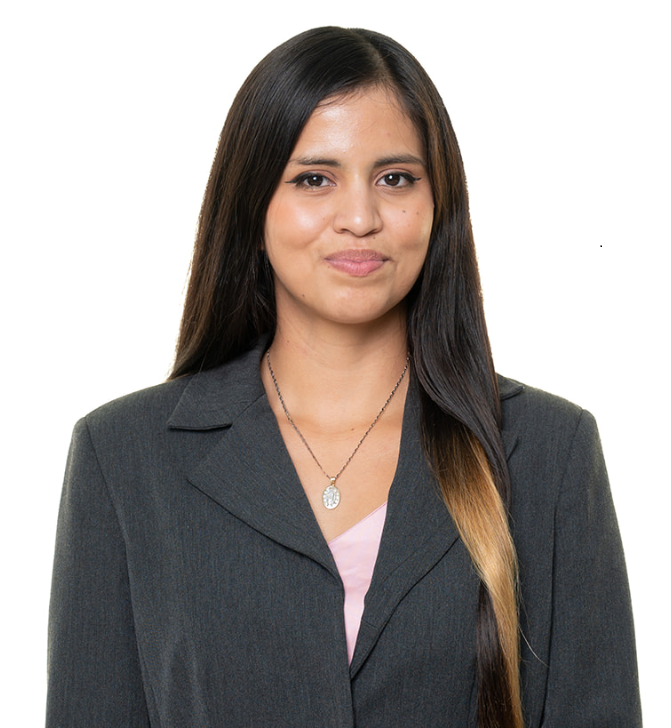
When Celia Ochoa Medina walks into Eli Lilly and Company’s Discovery Labs in San Diego, CA, she carries more than her lab notebook and data sets. She brings with her the story of a first-generation college student, a DACA recipient, a Latina in STEM, and a scientist who refused to let barriers define her future.
Born in Durango, Mexico, and raised in Indianapolis, she is a research scientist at Eli Lilly, where her background in biomedical engineering has led her into the world of structural biology and early drug discovery. But her journey began far from the laboratory. Ochoa Medina grew up in a family where curiosity and hard work were valued. Her father worked in construction, while her mother encouraged her natural curiosity and desire to learn.
“I always saw my father as very hands-on,” she recalls. “From my mother’s side, she always encouraged me to ask questions. I’m sure we all know that kid who ran around asking, ‘Why?’ or ‘How does this work?’ That was me.”
That curiosity found a home in high school, when she discovered Project Lead the Way, an engineering program that let her bring together two subjects she loved: biology and engineering. Yet even as her interests grew, Ochoa Medina rarely saw scientists who looked like her.
“Especially in high school, I didn’t see a lot of Latina scientists, so I didn’t really envision myself being able to do that,” she says. “But there were programs that were there to give me those opportunities.”
Her path to higher education brought another challenge. In high school, Ochoa Medina learned about her immigration status and suddenly found herself questioning whether college was even possible.
“Do I even have an opportunity to go to college?” she remembers wondering. “I knew that I wanted to go, but how am I going to pay for this?’”
The introduction of DACA in 2012 opened one door, while private scholarships and a supportive Latino community opened others. Looking back, she describes that period of her life with one word: perseverance.
“Looking back, I think it was definitely perseverance in the face of all the barriers, challenges, and, at times, the unknown,” she says. “But it was also about finding community, because I realize now that I would not have been able to do any of this on my own.”
That realization that success is rarely achieved alone would become a guiding principle throughout her career. Mentorship has been instrumental in Ochoa Medina’s journey. Her first formal experience came through Project Stepping Stone of Indiana, which introduced students to college campuses, scholarships, and mentors. Years later, she became a mentor herself. One mentor recognized her interest in STEM and introduced her to a biomedical engineer in California. Their relationship expanded her understanding of what a career in science could look like. The connection opened her eyes to possibilities beyond an undergraduate degree.
At Eli Lilly, mentors continued to shape her journey. During her early career, her first intern supervisor helped her build a strong research project and connected her with other scientists. Later, William (Bill) Heath played a major role in her development through a talent development academy that helps early-career professionals rotate across departments and discover their strengths.
Like many Latinas from tight-knit families, the idea of moving away from home was emotionally complex. Celia grew up in a large family. An older brother, a sister, another brother, and a youngest brother who is 11, almost 20 years younger than the oldest. She stayed close to home for college, but her work in external innovation at Eli Lilly exposed her to teams across the U.S. and sparked a desire to grow beyond Indiana. Growth eventually meant leaving Indiana. When she began thinking about relocating to Boston or San Diego, her mother’s reaction was deeply emotional. Over time, scholarship trips and travel helped her mother adjust to the idea. Ochoa Medina knew it wasn’t about leaving her family behind. It was about expanding her world.
“It’s not a bad thing. It’s just expanding and growing,” she remembers telling her.
Eventually, she made the move to San Diego, where Eli Lilly’s graduate program is supporting her PhD studies. Today, Ochoa Medina uses mass spectrometry to study how proteins move, change shape, or interact with other molecules to help guide early-stage drug discovery.
“We provide structural biology information to scientists who are working on early discovery of drugs,” she explains.
Joining the group required her to learn a highly specialized technical skill she had not previously mastered.
“That was an achievement in itself,” she shares with a smile. “Moving and joining a group where my background was not in mass spec. I had to learn a lot and quickly.”
Because structural biology combines laboratory experimentation with data analysis, her days move between the lab and computer work, building structures and visualizing changes in protein-protein interactions.
At the same time, she is pursuing a PhD through SDSU/UCSD, where her research focuses on comorbidities in people with HIV. Balancing full-time research with graduate school is demanding, but Ochoa Medina knows it is a challenge she wants to undertake.
Looking ahead, she wants to leverage her PhD to lead larger-scale scientific efforts.
“Part of what drove me into the PhD program was wanting to have the opportunity to drive larger projects as well,” she shares. “I think continuing to hone my technical skills… that’s why I’m open to wherever that might take me.”
Her definition of success has also evolved. Now, success means balance, wholeness, and the ability to give back. To young Latinas and women who aspire to careers in science, healthcare, or biotechnology, her advice is to believe in yourself at least as much as others believe in you.
“Over time, I think that I’ve learned that you have to be your biggest believer and cheerleader for your goals,” she shares as she remembers receiving scholarships where others saw her potential, even when she doubted herself.
“I can look back at when I was first receiving scholarships, and I was being assessed on potential for success, potential to build a career,” she shares. “Even though I had done the work, I had applied, and others saw potential or value, there were still times when I had a lot of doubt and a lack of confidence.”
What shifted her mindset was looking around the room at those who believed in her.
“Others believe in you,” she shares. “You should believe in yourself as well. I think that can get you pretty far, especially during challenges.”
Ochoa Medina stays involved with ERG initiatives like Eli Lilly’s Organization of Latinos, and she volunteers with youth-focused organizations. She also understands the importance of representation. The mentors and programs that helped her see new possibilities are now part of what she hopes to provide to others.
“There were others ahead of me who did a lot of the groundbreaking work so that I could be here,” she says. “I hope that I can do a little bit to hopefully make that easier for the generation to come.”
Ochoa Medina is not simply building a career in science; she is helping redefine who gets to imagine themselves as a scientist. Today, she is conducting research, pursuing a PhD, mentoring others, and creating a path for the young Latinas who will follow. For Ochoa Medina, the laboratory is a place of discovery. But her journey is also a discovery of what becomes possible when perseverance meets opportunity, and when one generation chooses to open the door for the next.
“For readers out there, I would also encourage them to follow their dreams, even if you’re not too sure what that may look like,” she says. “As long as you’re preparing, asking questions, looking to build a network, I think that’s really important. And don’t forget about your community.”